Pizza (Topped Dough) Sticks to the Peel
Recognizing the Symptom
Once topped, the dough won’t release when you try to slide it into the oven, or only releases in spots. Typical signs: the dough tears while sliding, catches at one corner, the toppings shift because the base isn’t gliding evenly, or the pizza deforms as you try to push it off the peel.
Causes
1. Too Much Time Spent Topped on the Peel
Semola or flour absorb moisture from the dough itself over time and lose their separating effect as a result – they can then no longer act as a sliding layer. The weight of the sauce and toppings amplifies this effect further. As a rule: once topped, keep moving quickly.
2. Too Little or the Wrong Release Agent
Regular flour absorbs moisture quickly and then clumps instead of acting as a sliding layer. Semola (durum wheat semolina) is coarser, absorbs moisture more slowly, and stays effective longer. Semolina flour or pasta flour also work as alternatives – both have a similar grain size to semola.
3. Thin or Damaged Spots in the Base
If the seam isn’t properly sealed during ball-shaping, thin spots and holes can form while stretching. Moisture from the sauce/toppings can push through these exact weak points more easily and cause the base to stick locally.
Found your cause but still unsure what to do?
Solution – Step by Step
Dust your work surface and peel with semola (durum wheat semolina) instead of flour. Use enough that the base noticeably glides when you move it, but not so much that it burns in the oven – a perforated peel lets excess semola fall off on its own. Still, the rule applies: as much as necessary, as little as possible.
Add sauce and toppings only once the oven is ready and the base can be loaded right afterward. Once topped, keep moving quickly – the longer the base sits, the more moisture the release agent draws out of the dough, losing its separating effect.
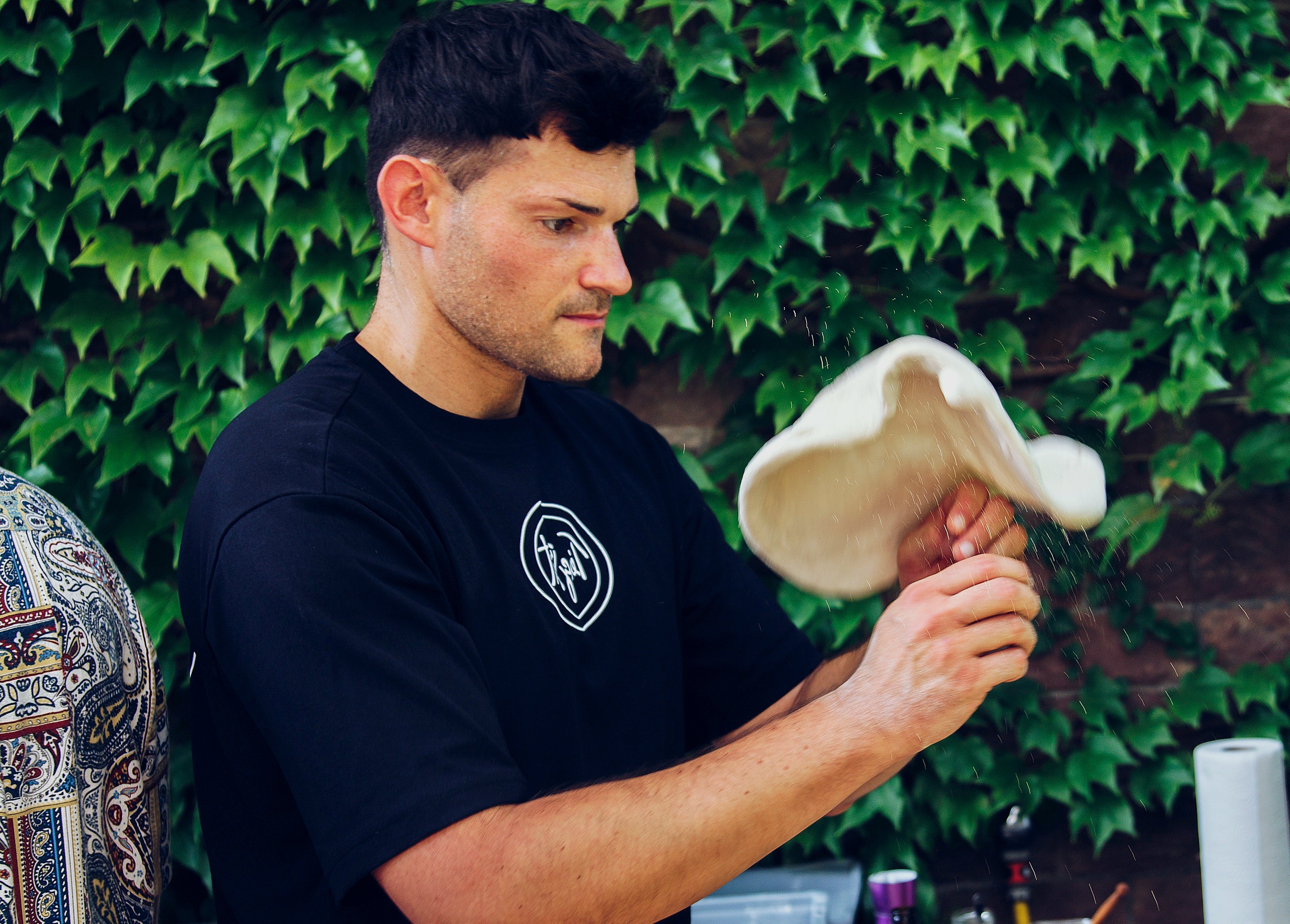
Don’t stretch the base to its final size while shaping. Only after topping, stretch it to final size on the peel: carefully lift the rim, reach underneath with your fingertips, and stretch it out all around. This also shortens the time the topped base spends on the peel – and with it, the time semola or flour has to absorb moisture from the dough and lose its separating effect. It also lets you feel right away if the dough is sticking anywhere.
Gently shake the peel back and forth. If the pizza moves visibly and evenly, it’s ready. If it catches somewhere, add a bit more semola right there before continuing.
Load it with a quick, short push-pull motion instead of hesitating. Slow, hesitant sliding gives moisture more time to bind the dough to the peel.
Scatter semola or flour all around the pizza on the work surface or peel. Work a dough scraper under the pizza from all sides through the semola to loosen the base and introduce fresh, dry release agent. Work carefully, going all the way to the center. Once done, reshape the pizza back into a round.
If nothing else works: carefully fold the base over (emergency calzone) and load it into the oven that way – it at least saves the ingredients, even if the classic shape is lost.
Pizza Sticks to the Stone or Pan
Recognizing the Symptom
The base won’t release from the hot stone or pan – either during baking (it bakes on) or only when taking it out afterward. Cheese or topping residue sticks, and the base sometimes tears when removing it.
Cause
A Stone That’s Too Cold or Not Preheated Enough
In typical home ovens, a pizza stone usually needs 45–60 minutes of preheating at the highest setting to get evenly hot. A stone that’s still cold or unevenly hot makes the dough more likely to stick rather than sear immediately.
Solution
Preheat the stone or steel for at least 45–60 minutes at the highest setting before shaping the first base. Only start topping once the oven is “ready to bake” – not before.
Dough Already Sticks While Shaping
Recognizing the Symptom
The dough already sticks to the work surface or your hands, even before it’s been topped at all.
Cause
Usually simply too little release agent while shaping: the dough ball needs to be generously dusted with flour or semola when removing and shaping it, and shouldn’t stick anywhere. If the cause runs deeper (e.g. hydration too high or kneading time too short), that belongs structurally in the diagnosis Dough Too Soft, Sticky, or Without Structure – this section only covers the practical short-term fix.
Solution
Dust generously while shaping. Usually nothing more is needed here.
Before topping, shake off or remove excess semola or flour so it doesn’t end up under the toppings.
Quick test to finish: Try sliding the fully shaped base a short distance across the work surface. If it doesn’t glide freely right away, there’s too little or the wrong release agent underneath – fix it now, not after topping.
Prevention
- Generally use semola instead of regular flour to dust the work surface and peel, since it’s coarser and doesn’t turn soggy as quickly.
- Top the pizza base on the work surface, then move it – already topped – onto the peel, rather than the reverse. This keeps the time spent topped on the peel to a minimum.
- Don’t stretch the base to its final size while shaping; instead, only after topping, stretch it to final size directly on the peel – by this point the dough has relaxed a bit, stretches more predictably, and this also shortens the total time it spends topped on the peel, during which semola/flour can absorb moisture and lose their separating effect.
- Always fully preheat the oven or stone before topping the first base.
- When ball-shaping the dough, make sure the seam is properly sealed – this avoids thin spots and holes where moisture can later push through.
- Use an untreated wooden peel: wood absorbs some moisture, so raw pizza dough doesn’t stick to it as quickly as it does to metal or stainless steel.
If the stickiness runs deeper – for example too-high hydration or too little kneading –, the helps you avoid that from the start.