Recognizing the Symptom
Dough isn't rising at all
- After the planned rest, there's barely or no visible volume increase
- The dough feels almost identical to right after kneading
- While baking, the rim stays completely flat, no oven spring at all
Only the rim isn't rising (the dough itself is fine)
- The dough has proofed enough, but little or no rim volume develops while baking
- The rim stays thin and flat instead of rising
Causes
Fermentation speed depends heavily on temperature: for every 5 °C difference, the activity of yeast and enzymes changes by roughly a factor of 2. In the refrigerator (around 7 °C), fermentation runs about 6 to 7 times slower than at 20 °C room temperature. If the yeast amount or time was planned for a certain room temperature, but the actual environment (e.g. a cold room in winter, a cool kitchen) was significantly colder, the dough can barely develop visible volume within the planned time. That looks like “not rising at all”, but it's usually “rising much more slowly than expected”.
Fresh yeast isn't always equally strong: its leavening power varies by manufacturer, freshness, and whether the cold chain was maintained during storage and transport. Use the freshest yeast you can and watch the best-before date – a tight or expired date increases the risk of weak or inactive yeast. But even with a good best-before date, the yeast can already be inactive, especially if the cold chain for fresh yeast was interrupted during storage or transport.
Yeast dies at around 45 °C. If the kneading water or the dough temperature right after kneading was too hot, the yeast in the dough may already have been killed – in that case, a warmer spot or more patience won't help anymore.
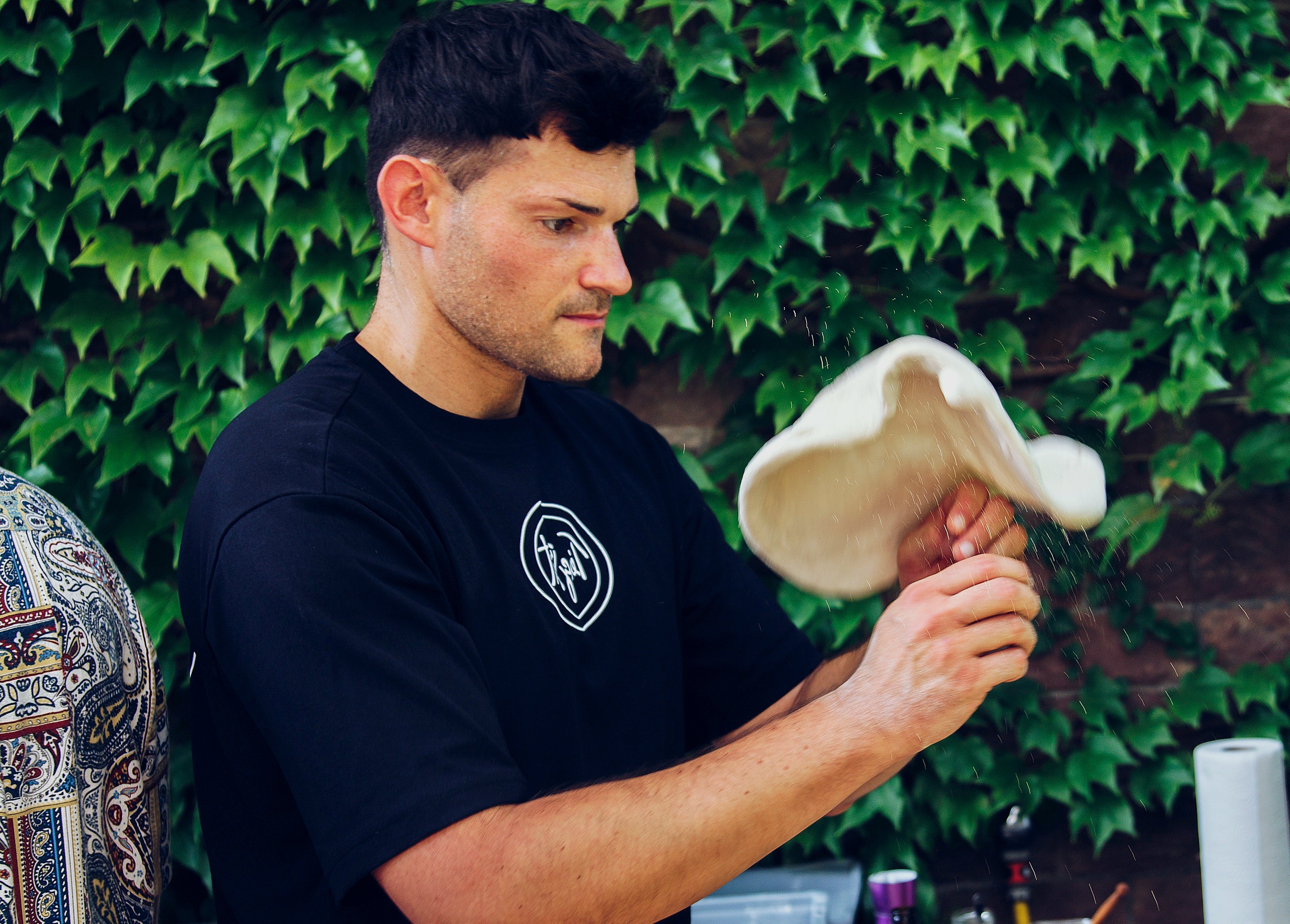
Oven spring in the rim comes from the expansion of already-present fermentation gases during baking – without enough gas in the rim, there's no meaningful oven spring. Several factors play together here: too little fermentation gas in the rim (underproofed dough, or too much gas pressed out of the rim while shaping); wrong stretching technique (gas should be pushed deliberately from the center into the rim – not have the rim itself flattened or degassed); already too much fermentation gas in the dough ball (more gas gets pushed into the rim while stretching; if there was already too much gas beforehand, the dough structure can no longer hold the extra amount – the rim already collapses while stretching and won't rise properly while baking either); dough too stiff (a stiff, not very extensible dough resists expansion and has very little oven spring); too little oven heat (radiant heat is the most important factor for rim rise – the hotter the oven, the stronger the oven spring).
Found your cause but still unsure what to do?
Solution: Step by Step
And watch over the next hours whether it takes off.
Push fermentation gas from the center toward the rim with the first finger joints, instead of working the rim itself.
More heat means a stronger oven spring in the rim.
This is most reliably done with the . Rule of thumb as a rough guide: for every 5 °C cooler environment, plan for roughly double the time (or use correspondingly more yeast).
Prevention
- Yeast amount, environment temperature, and time are always directly linked and need to match each other. Which of them is fixed and which you adjust accordingly is up to you – what matters is that all three fit together, instead of taking a single number from a recipe unchanged.
- Use the freshest yeast possible and watch the best-before date – with fresh yeast, also make sure the cold chain stayed unbroken during storage and transport.
- Watch the water temperature while kneading: yeast dies at around 45 °C.
- Deliberately practice your stretching technique: push gas from the center into the rim, instead of flattening the rim itself.
- Preheat the oven as hot as possible before the pizza goes in.